
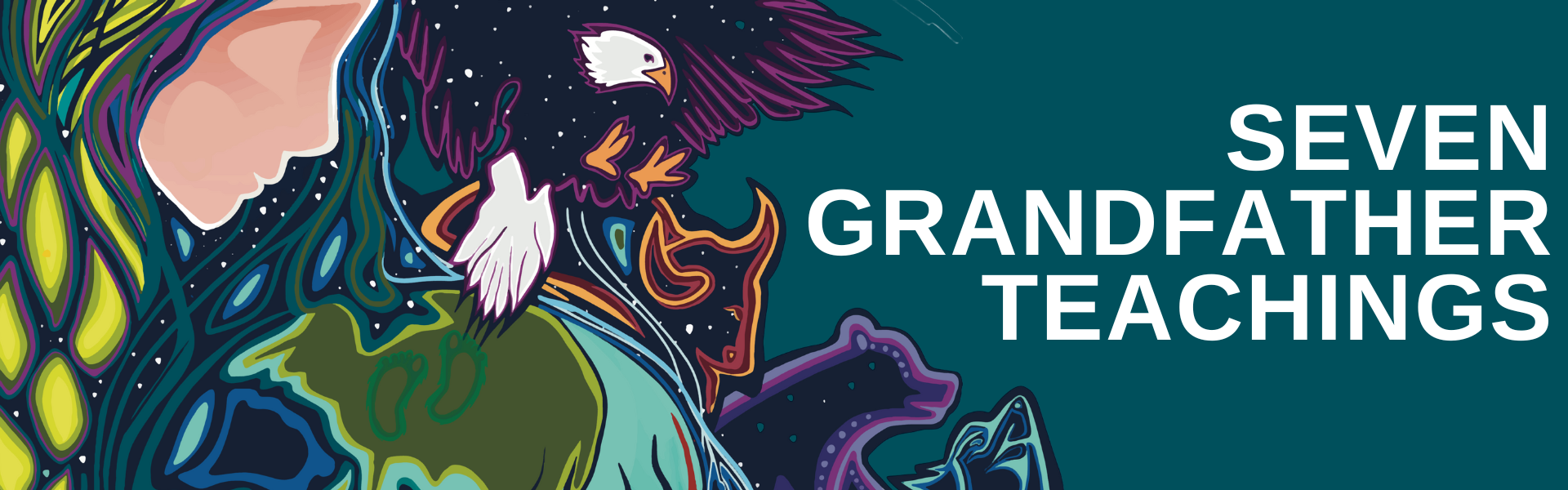

aadizookaanag - a sacred or living story
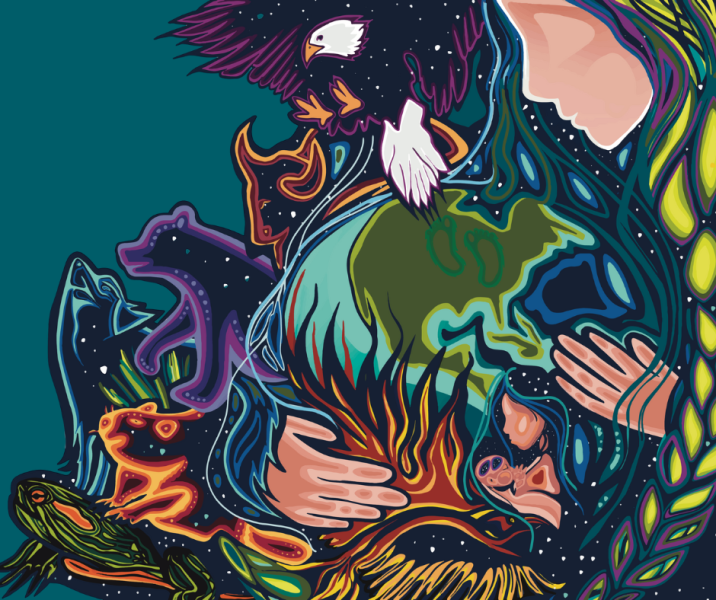
Artists: Sherri Loonsfoot-Aldred & Aiyana Aldred
Artwork Interpretive Statement:
Mother Earth cradles her child at the center of a circle alive with animals and color. Eagle, buffalo, bear, wolf, beaver, turtle, and crow carry stories of respect, care, and reciprocity. A fire glows at the heart symbolizing community and the bond between all living beings.
Since time immemorial, Indigenous peoples of the Great Lakes have honored agreements with the land, waters, plants, animals, and each other, ensuring balance and care for all life. The Anishinaabe people are part of the Three Fires Confederacy – Ojibwe, Odawa, and Potawatomi. Anishinaabe teachings passed from one generation to the next, speak of a First Treaty with Gichi Manidoo (the Creator), which obligates all of creation to care for one another an ever deepening, far reaching network of kinship.
RECIPROCITY – mutual exchange of dependence, action, or influence; mutual exchange of privileges.
DEBA’OOKII – s/he has enough to give away, has enough for everyone
A treaty is a formal agreement between two or more sovereign nations. Treaties between Tribal Nations and the U.S. are the supreme law of the land as outlined in the United States Constitution Article VI Clause 2.
In the U.S., treaties between Indigenous tribes and the federal government were meant to establish peace and define land boundaries, but often resulted in disruption of traditional lifeways and forced assimilation. Treaties that impact Anishinaabe people living in the Upper Peninsula of Michigan include the Treaty of 1836, the Treaty of 1842, and the Treaty of 1854. These agreements ceded large areas of land under severe duress while reserving certain rights such as Tribal Nation governance and sovereignty, access to education, and management of wenji-bimaadiziyaang (from where we get life) or natural resources by hunting, fishing, and gathering; however, many of the original promises were not honored. Today, Tribal Nations continue to practice and advocate for sovereignty and access to land, water, and resources on which Anishinaabe lifeways depend.
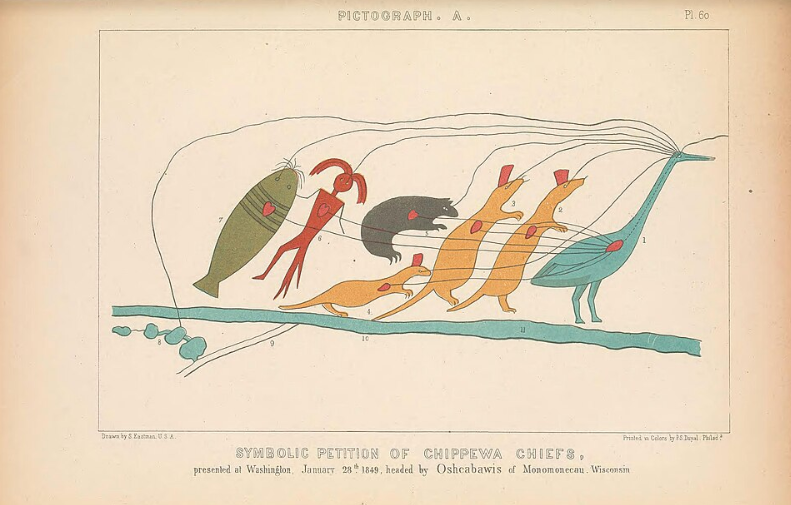
The image shown above is commonly known as the Symbolic Petition of the Chippewa Chiefs. A birch bark version was carried to Washington D.C. by Oshkaabewis in 1849 as a message to President Fillmore. This depiction demonstrates the unity of the chiefs in their vision and authorizes Chief Buffalo of the Crane Clan to speak on their behalf. The petition successfully drew attention to the federal government’s failure to uphold its treaty obligations.
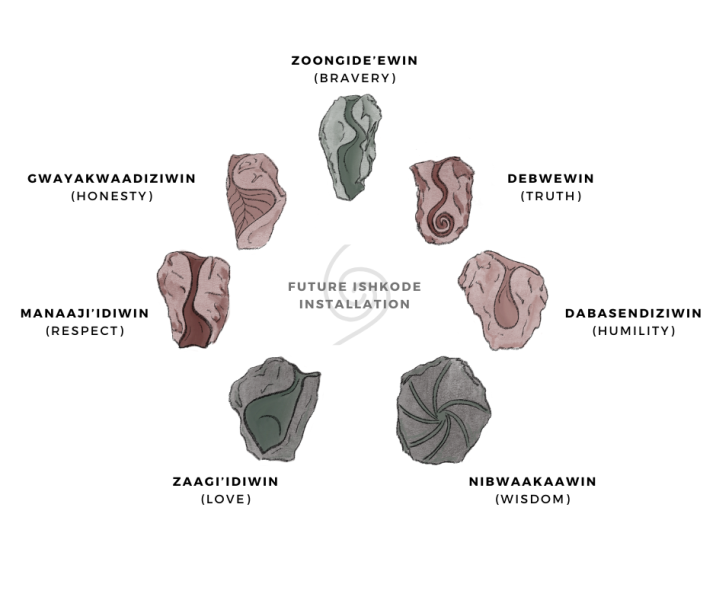
The Seven Grandfather Teachings—Wisdom, Love, Respect, Bravery, Honesty, Humility, and Truth— can guide us in caring for the earth and one another. Collectively, these teachings lead us to Mino-bimaadiziwin–”The Good Life”–which serves as the basis to honor these agreements and lead a life of peace and balance. Treaties are not just old pieces of paper; they are living promises between sovereign nations. How do you keep your promises? How do you heal broken promises?
Links to Learn More:
This section is an ever-growing collection of stories and resources.
If you have suggestions for additional resources or stories related to this site SUBMIT THEM HERE
More stories of Anishinaabe Treaty Rights in the Northern Great Lakes: https://www.ogichidaa.org/storieshttps://mqtmaritimemuseum.com/marquette-lighthouse
Seven Grandfather Teachings – MQTCompass.com
Learn about the Seven Grandfather Teachings Monuments art installation:
Artist: Blog | MQTCompass.com
Community Connections:
Have a memory, story, or reflection inspired by one of the shoreline sites? Share your voice! Stories can be personal, historical, or reflective. Submit writing, images, audio, or video – This is the first phase of a living trail—a storytelling project that weaves together public spaces, community voices, history, and art to deepen our connection to the water, land, and people of Marquette.
Each stop along the trail invites you to slow down, reflect, and explore what makes this place meaningful. Through shared stories and creative contributions, we hope to spark curiosity, appreciation, and a stronger sense of belonging.
Your perspective matters. This is a space where all are welcome to share what’s important to them—about this place, its past, its future, and the community we shape together.
Cultural Trail Partners
COMING SOON – Cultural Trail partners and knowledge centers